_800x304a.png)

🌿 How Stress Shows Up in the Body Before You Realise You're Stressed
Jaw tension, digestive changes, headaches, fatigue and why your body often knows before your mind does.
"What do you do to manage your stress?"
It's a question I ask people regularly in clinic.
One of the most common answers?
"I'm actually not that stressed."
Then we keep talking.
They're waking during the night.
Their shoulders are tight.
Their jaw aches in the morning.
They're getting headaches.
Their digestion has changed.
They're exhausted... but can't switch off.
Sound familiar?
One of the biggest lessons I've learnt after more than 25 years in practice is this:
Your body often knows you're stressed before your mind does.
Many of us become so used to being busy that feeling stressed starts to feel... normal.
We keep going.
We push through.
We tell ourselves we'll slow down next week.
Meanwhile, the body quietly starts sending messages.
The problem is, we often don't recognise those messages until they become impossible to ignore.
That's why I love what I call Body Wisdom.
The body is always communicating.
The question is...
Are we listening?
🌿 Stress Isn't Just in Your Head
When people hear the word "stress", they often think of emotions.
Feeling worried.
Feeling overwhelmed.
Feeling anxious.
But stress is much more than that.
It's a whole-body response.
When your brain senses pressure—whether it's work, family, finances, poor sleep or even ongoing worry—it sends a message to the rest of your body.
"Be ready."
Your heart beats faster.
Your breathing changes.
Your muscles tighten.
Digestion slows.
Hormones shift.
Blood sugar changes.
This response is brilliant when you genuinely need it.
The problem is...
Many of us never switch it off.
😬 Your Jaw Might Be Telling the Story
One of the first places I notice stress showing up is the jaw.
People clench their teeth without realising.
Some grind their teeth at night.
Others wake with:
• Jaw pain
• Tight temples
• Headaches
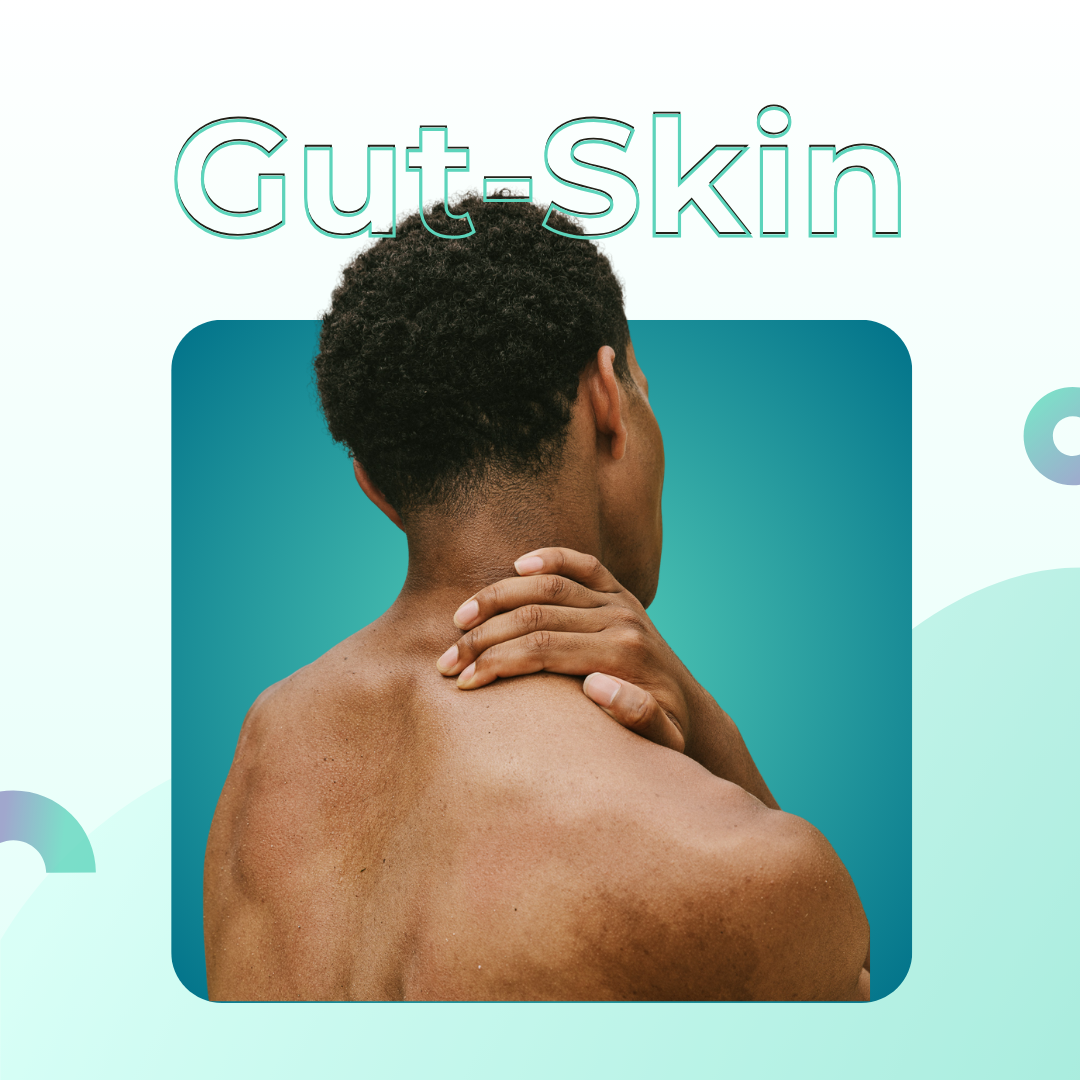
• Neck stiffness
Your jaw is often holding onto tension that your mind hasn't acknowledged yet.
It's one of the body's early warning signs.
🤕 Those "Random" Headaches
How many people have headaches that seem to appear for no obvious reason?
Sometimes they aren't random at all.
Stress often creates tightness through the neck, shoulders and scalp.
Over time, that tension can contribute to recurring headaches.
Pain relief may help temporarily.
But it's also worth asking:
"What is my body responding to?"
🌿 Your Gut Feels Stress Too
Have you ever felt nervous before an important event and suddenly needed the toilet?
That's the gut-brain connection at work.
Your digestive system and your nervous system are constantly talking to each other.
When stress becomes ongoing, people may notice:
• Bloating
• Indigestion
• Reflux
• Constipation
• Loose bowels
Many people blame the food.
Sometimes the food isn't the whole story.
Sometimes the nervous system is.
😴 Why You're Tired But Can't Sleep
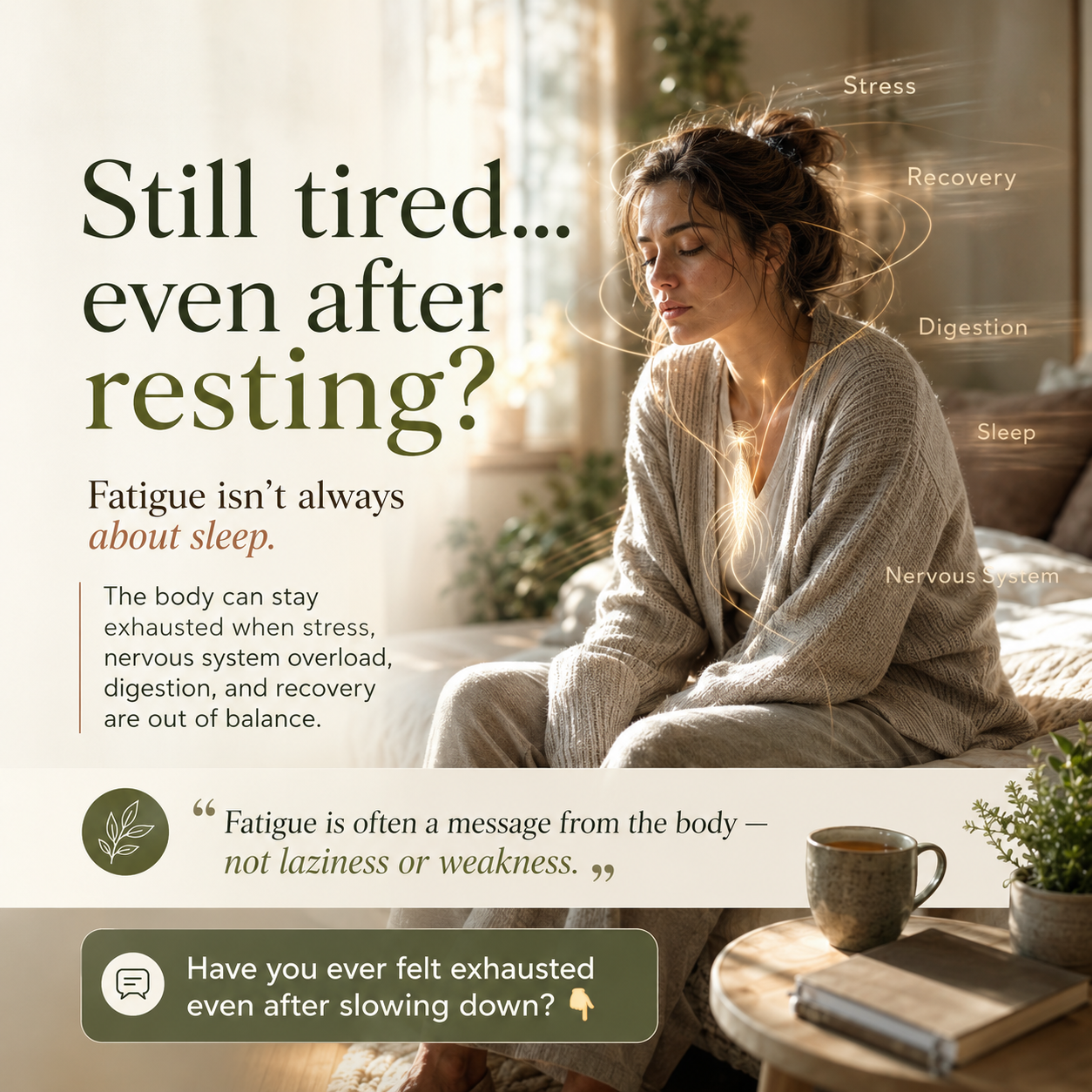
One of the most frustrating parts of chronic stress is feeling exhausted...
Yet lying awake at night.
Your body is tired.
But your brain hasn't received the message that it's safe to switch off.
I call this being "tired but wired."
It's incredibly common.
And it's one of the biggest clues that the nervous system may be under pressure.
🍫 Craving Sugar? It Might Not Be About Sugar
Stress changes the way the body uses energy.
When we're under pressure, it's common to crave:
🍫 Chocolate
🍪 Biscuits
🍟 Salty foods
☕ Coffee
Many people blame themselves for lacking willpower.
I look at it differently.
I ask,
"What is the body asking for?"
Often, it's looking for quick energy because it's been running on empty.
❤️ Your Muscles Remember
Stress isn't just something we think.
It's something we carry.
Think about your own body.
Where do you hold tension?
Your neck?
Your shoulders?
Your lower back?
Your jaw?
For each person, it can be different.
That's why I always encourage people to become aware of where their body stores stress.
Awareness is the first step towards change.
🌬️ Listen to Your Breathing
When was the last time you noticed your breathing?
Most people don't.
Until they stop and pay attention.
Stress often creates:
• Shallow breathing
• Faster breathing
• Chest breathing instead of diaphragmatic breathing
One of the simplest things you can do is pause for a moment and take five slow, deep breaths.
It sounds almost too simple.
But your nervous system responds remarkably well to simple things.
🌱 Stress Doesn't Mean You're Weak
I think this is really important.
Feeling stressed doesn't mean you've failed.
It doesn't mean you're weak.
It means you're human.
Life has seasons.
Busy seasons.
Challenging seasons.
Emotional seasons.
The goal isn't to eliminate stress completely.
That's impossible.
The goal is to help the body recover from it.
🌞 Recovery Is Different From Rest
This is something I talk about often.
You can rest...
Without recovering.
You can spend hours on the couch scrolling through your phone.
Your body isn't moving.
But your brain is still busy.
Recovery happens when the nervous system feels safe enough to relax.
Sometimes that's through:
🌿 Walking in nature
🤲 Bowen Therapy
🧘 Gentle breathing
📚 Reading
❤️ Time with family
🌞 Sitting in the sunshine
Simple things often create the biggest changes.
🥦 The Foundations Matter
Whenever someone asks me,
"What's the best supplement for stress?"
I usually smile.
Because before we talk about supplements, I like to ask about the foundations.
🥦 Are you eating well?
💧 Are you hydrated?
😴 Are you sleeping enough?
🚶 Are you moving your body?
🌿 Are you making time to recover?
The body responds remarkably well when we consistently support the basics.
⚖️ The 80–15–5 Rule
This is exactly why I created the 80–15–5 Rule.
Stress often increases when we expect ourselves to be perfect.
Perfect eating.
Perfect routines.
Perfect parenting.
Perfect work.
Perfection creates pressure.
The 80–15–5 Rule reminds us that health is about balance.
🥦 80% Nourish your body.
😊 15% Be flexible.
🎂 5% Celebrate life without guilt.
That mindset doesn't just help your body.
It helps your nervous system too.
❤️ Ask Yourself These Questions
If you've been feeling "off" lately, take a moment to ask yourself:
• 😬 Am I clenching my jaw?
• 🌿 Has my digestion changed?
• 🤕 Am I getting more headaches?
• 😴 Am I waking refreshed?
• ⚡ Am I constantly tired?
• 🌬️ Have I noticed myself breathing more shallowly?
These aren't reasons to panic.
They're invitations to pause.
Your body may simply be asking for a little more support.
🌿 The Bigger Picture
One of my favourite sayings is:
The body whispers before it shouts.
Jaw tension.
Headaches.
Digestive changes.
Poor sleep.
Fatigue.
They're not always isolated problems.
Sometimes they're part of a much bigger conversation.
The more we learn to listen to those whispers, the easier it becomes to support our health before those whispers become louder.
That's what Body Wisdom is all about.
🌱 The Takeaway
Stress isn't always something you feel emotionally.
Sometimes you feel it physically first.
The tight jaw.
The sore neck.
The restless nights.
The bloated tummy.
The afternoon exhaustion.
Your body isn't trying to work against you.
It's trying to communicate.
So the next time something feels "off"...
Don't just ask,
"How do I make this symptom disappear?"
Ask,
"What might my body be trying to tell me?"
Because healing often begins with curiosity.
And when we learn to listen to our bodies, we give them the best opportunity to do what they were designed to do.
That's the essence of Body Wisdom. Read More…






.png)




.png)

.png)
.png)
.png)
.png)